


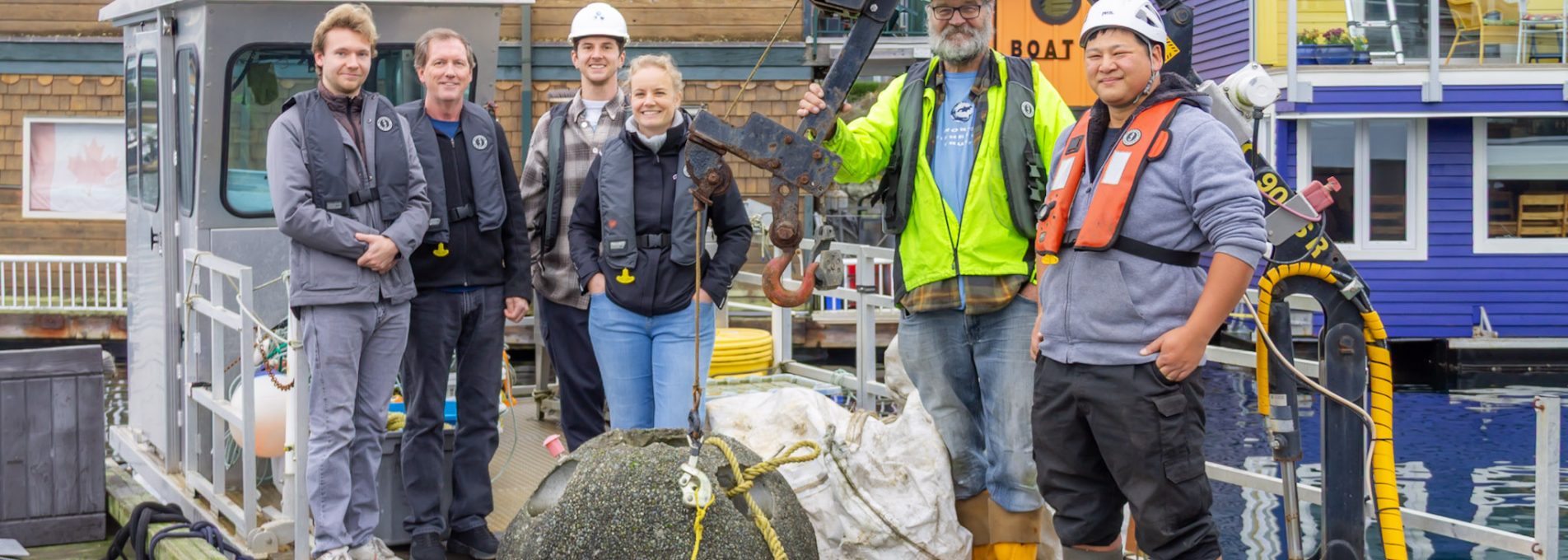
GVHAs environmental sustainability plan challenges us to think differently, to act boldly, and to work together. Whether through decarbonizing our operations, supporting a healthy marine environment, or strengthening partnerships across sectors, we are aligning our actions with long-term value—for the harbour, for the people who depend on it, and for future generations.
GVHA has identified sustainability along the following definitions:
Sustainability at Greater Victoria Harbour Authority is the integration of environmental stewardship, community interest, and economic development into everything we do—from daily operations to long-term planning and governance. A key part of this commitment is our dedication to Indigenous governance and partnership with the Songhees Nation and xʷsepsəm (Esquimalt) Nation, honouring their stewardship of the lands and waters and ensuring their leadership guides our path forward. We strive to create alignment between environmental leadership, economic resilience, and responsible growth, ensuring the harbour remains viable for generations to come.
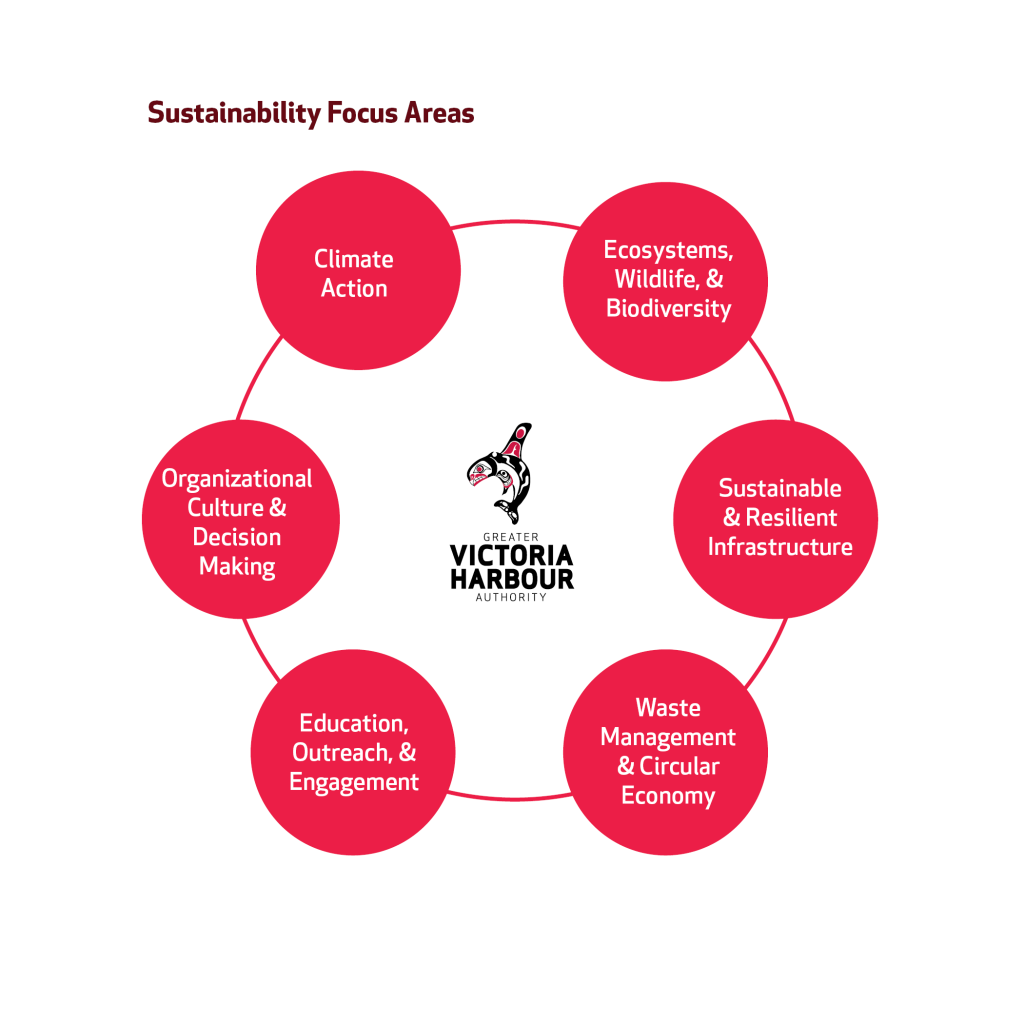
For the next five years (2026 -2030), GVHA environmental sustainability approach is centred around six focus areas:
Climate Action: measuring and reducing Greenhouse Gas (GHG) emissions and Critical Air Contaminants (CAC’s) associated with our operations.
- Reduce GVHA’s organizational Scope 1 and 2 GHG emissions by 30% by 2035, compared to the 2025 baseline of 98.9 tCO2e.
- By 2030, GVHA has developed a course of action for measuring all Scope 3 emissions, including outlining our approach to tenant engagement.
- By 2030, decarbonization opportunities have been identified and all financially feasible reduction opportunities have been executed, with a focus on reducing energy and water in owned and operated facilities through efficiency measures.
Ecosystems, Wildlife, & Biodiversity: protecting the land, sea, and air around our properties, promoting a healthy ecosystem, and integrating traditional ecological knowledge.
- Level 3 for the Aquatic Ecosystems indicator in the Green Marine Certification Program has been achieved by 2030.
- Level 3 for the Underwater Noise indicator in the Green Marine Certification Program has been achieved by 2030.
- By 2030, GVHA has created or participated in five environmental impact initiatives delivered in collaboration with partner organizations with a focus on advancing the blue economy, investing in habitat restoration, and supporting biodiversity.
- Environmental initiatives incorporate, where possible, Traditional Ecological Knowledge (TEK) and are co-developed with local First Nations knowledge keepers.
Sustainable and Resilient Infrastructure: investing in resilient infrastructure, climate risk mitigation, and promoting renewable energy.
- Conduct an assessment of climate risks and integrated mitigation and adaptation measures into the future state of all GVHA infrastructure by 2028. The assessment should include but not limited to flooding, energy and water protection against climate change with the objective of operational readiness in times of extreme climate or natural disaster.
- Develop a renewable energy program by 2030.
Waste Management & Circular Economy: reducing landfill waste and promoting circularity.
- Conduct a waste audit to establish a clear baseline and identify areas for improvement, including operational waste (from GVHA) and visitor waste by 2027.
- Circular Economy opportunities have been assessed and an action plan will be developed by 2030.
Education, Outreach and Engagement: partnering with communities to connect and educate through events and initiatives.
- GVHA hosts, facilitates, or sponsors at least two events each year to increase education and advance knowledge around sustainability, harbour and marine ecosystems for commercial operators, tenants, marina users, and visitors. This can be in partnership with other organizations, such CRD and their Harbour Stewardship Speakers Series and Cruise Lines International Association (CLIA).
Organizational Culture & Decision Making: embedding sustainability into our culture and everyday operations by enhancing sustainability education and accountability in all roles.
- All staff are fully informed and engaged in GVHA’s sustainability priorities.
- Courses or professional development activities on a relevant sustainability topic are offered to staff every year.
- Sustainability is embedded in decision-making criteria for capital and operational spending above a set threshold by 2028.
Green Commercial Guidelines have been developed to incorporate sustainability criteria into tenant and vendor selection by 2029.
Read the plan to find each area’s key approach and plans.