

Weathering the storm
When snow continued falling and the winds picked up during the storm of 1996, Victorians braced for the storm of the century. Most of the city shut down and travel plans were cancelled. Ryan Burles, CEO of Black Ball Ferry Line, also remembers that day as the only weather-related service cancellation in their 59-year operating history.
“I actually think the ferry could have run, but nobody could get to us,” he says. “There were six-foot drifts blocking the streets. A few employees and I slept across the road at the Grand Pacific. The whole city just shut down.” The next day, Burles spotted a bobcat clearing Erie Street, and he hired the driver to clear a lane for the handful of cars looking to get to Port Angeles in Washington.
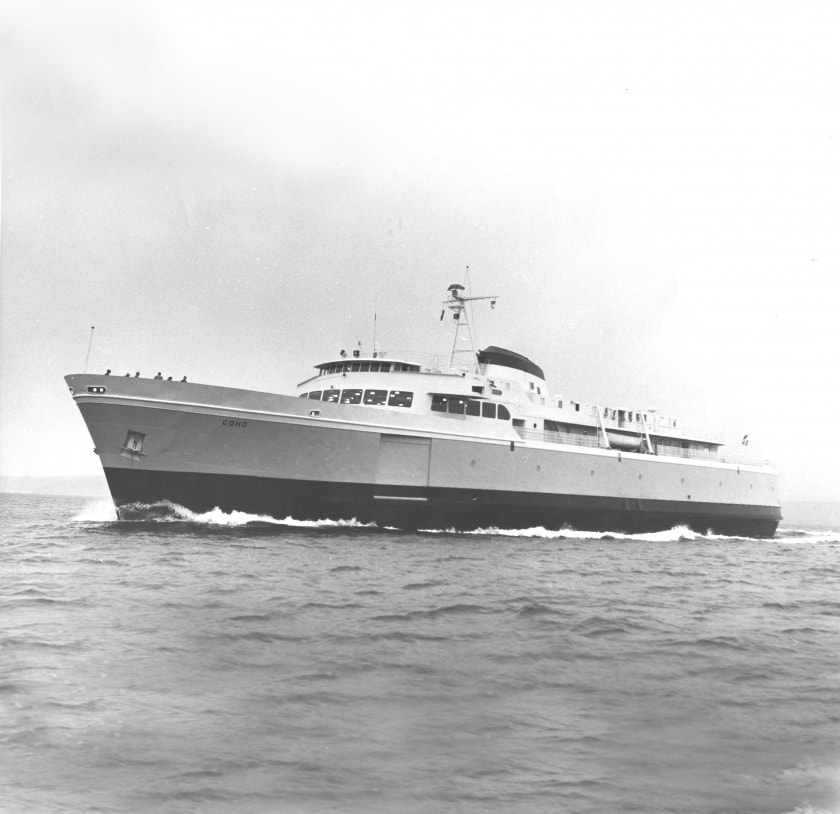
He says that people are often curious about how the Black Ball line can operate in the harshest of weather conditions. Much of this is attributed to the largely protected harbours of both the Victoria and Port Angeles ports. Ships leaving from Tsawwassen, for example, are more exposed and are up against bigger swells. The MV Coho also has a remarkably sturdy build. Her bow allows her to ride above large waves, a feature that many other commuter ferries don’t have.
Though the MV Coho has only been operating since 1959, the Black Ball name goes back much further—200 years to a Black Ball freight line that ran between New York and Liverpool.