

Welcome to xwsəyq’әm.
You are standing on the traditional territory of the lək̓ʷəŋən People.
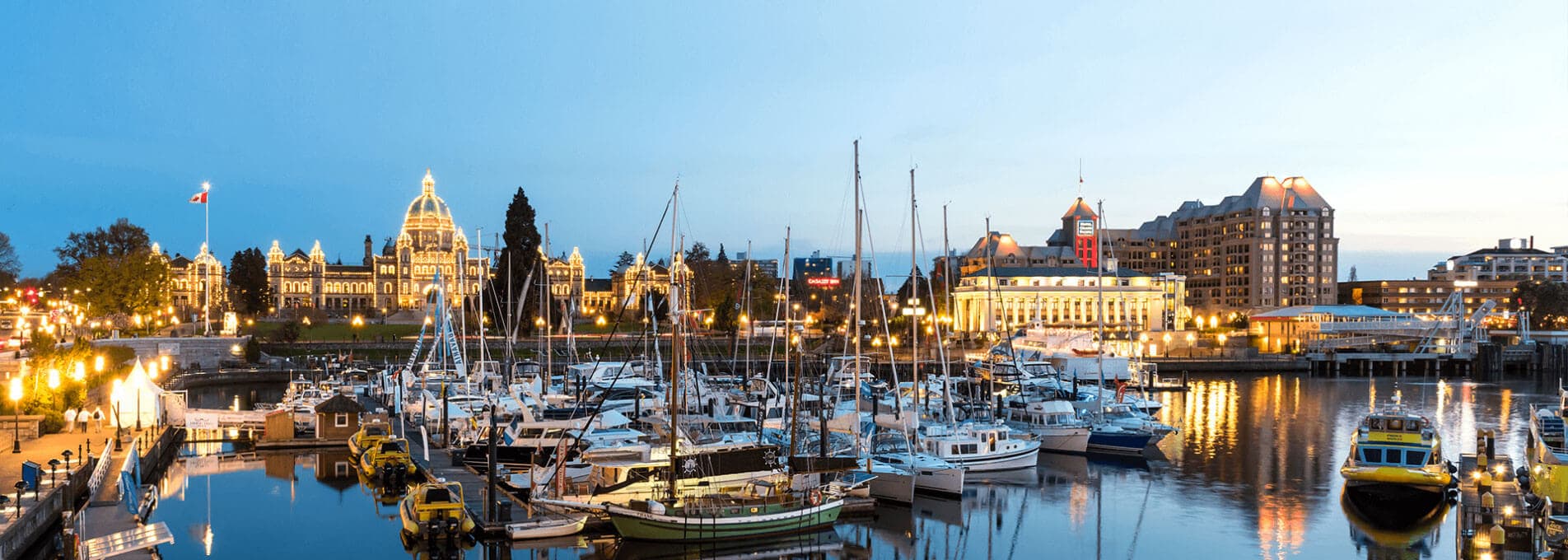
In the lək̓ʷəŋən language, this waterfront spot is called xwsəyq’әm, which means Place of Mud. It is pronounced Whu-SEI-kum. This harbour had wide tidal mudflats and some of the best clam beds on this island. You can still see the mud at a low tide. The mudflats were buried when the area was filled in to construct the Empress Hotel.
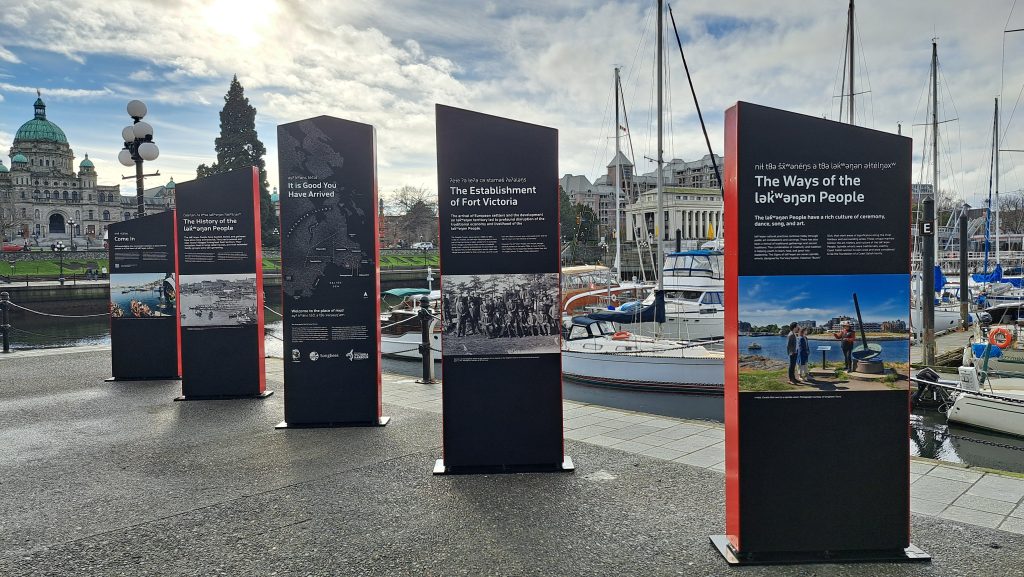
These interpretative panels acknowledge the strong connection between this place and the lək̓ʷəŋən People. lək̓ʷəŋən Big Houses, which were communal dwellings where several families lived under one roof, were the inspiration for their design.
The video below, which was kindly shared by the Greater Victoria School District 61, shows Yux’wey’lupton Bradley Dick performing a traditional lək̓ʷəŋən welcome song.
əné núiləŋ (Come in)
The lək̓ʷəŋən People know these lands as “the Place of Smoked Herring.” These waters were once abundant with herring, which were a significant part of the lək̓ʷəŋən food trade. Today, the Nations, alongside dedicated partners, are working to revitalize the harbour and support the return of herring and other vital marine life.
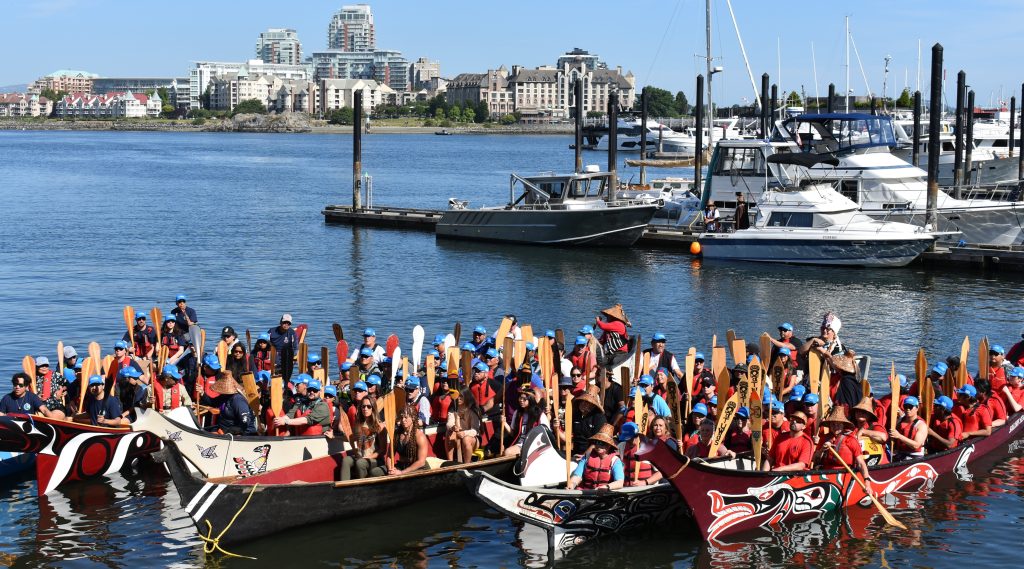
Traditionally, visitors arriving in lək̓ʷəŋən territory asked for permission to come ashore. Visitors arriving by sea would raise their paddles, stand to introduce themselves, and state their intention and purpose. This cultural protocol continues to this day.
The lək̓ʷəŋən People have hunted, fished, and gathered here since time immemorial. They had seasonal and year-round villages throughout their territory. Their ancestors had extended family groups that were self-governing. All household groups claimed specific living spaces and areas where they could hunt, fish, and harvest plants.
This region, with its temperate climate, natural harbours, and rich resources, was a trading centre for a diverse group of First Peoples.
The development of today’s modern city makes it difficult to understand how this landscape once supported the lək̓ʷəŋən People. However, footprints of traditional use are all around the harbour, and this land is inseparable from the lives, customs, art, and culture of those who have lived here since the beginning.
The lək̓ʷəŋən People live on the southeastern coast of Vancouver Island. Their traditional territory extends over the southern portions of the island and the lower Gulf and San Juan Islands. These lands were stewarded by six communities: Teechamitsa, Whyomilth, Kosapsum, Chekonein, Swengwhung and Chilcowitch.
Today the lək̓ʷəŋən People are known as the xʷsepsəm Nation and Songhees Nation.
The arrival of European settlers led to profound disruption of the traditional economy and livelihood of the lək̓ʷəŋən People.
The Douglas Treaties were signed in 1850 and 1854. Under the treaties, the lək̓ʷəŋən People agreed to share part of their territories to allow settlement. In exchange, James Douglas provided a small number of material goods (cash, clothing, and blankets). He committed that the signatories and their descendants would retain their village sites and fields for their continued use and would have the “liberty to hunt over unoccupied lands” and the right to “carry on their fisheries as formerly.” However, the lək̓ʷəŋən People were forced, through political pressure in the early 1900s, to move from the Inner Harbour to the Esquimalt Harbour where they still live today.
The lək̓ʷəŋən People have a rich culture of ceremony, dance, song, and art, which continues through public art installations and carvings. There has also been a revival of traditional gatherings and sacred traditions. This combination of creativity and tradition is helping youth to learn, heal, and grow into leadership.
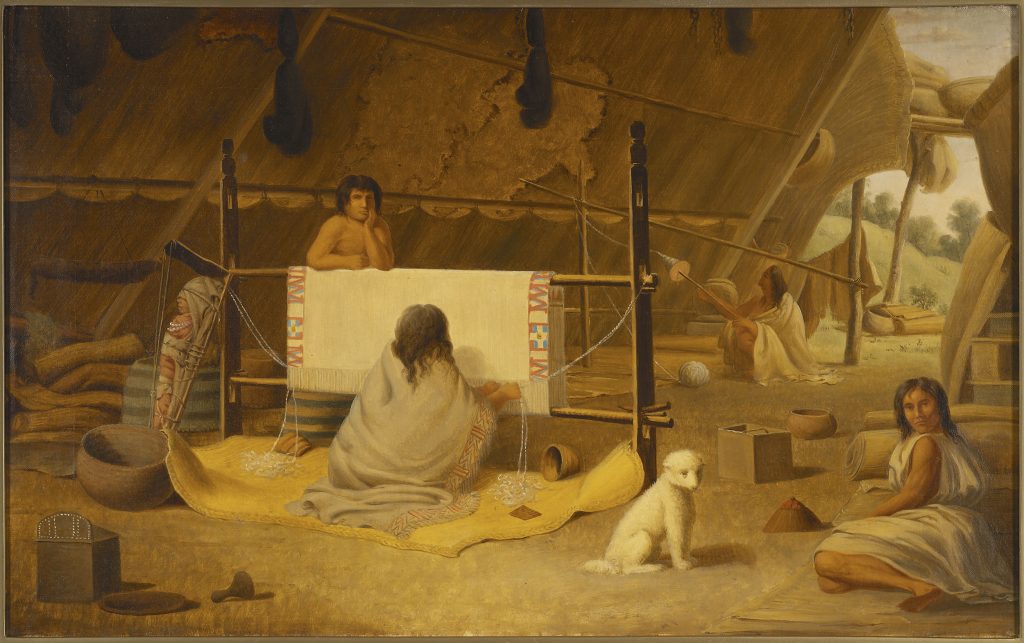
You can see lək̓ʷəŋən art around the harbour. The nearby marina gates show two sea-wolves, along, with landscapes and seascapes, designed by John and Lajah Warren. A large spindle whorl, named xwəyq’əm and designed by Yux’wey’lupton Clarence “Butch” Dick, rests just yards away on the Lower Causeway. Spindle whorls were used by lək̓ʷəŋən women to spin wool. The wool was made from the hair of the Woolly Dog, which is now extinct, and mixed with mountain goat hair to produce clothing and blankets.
The seasons were important in traditional lək̓ʷəŋən life.
k̓ʷək̓ʷəl̓áʔəsn (spring)
In spring, these lands were filled with the blue Camas (qʷɫaʔəl) flowers. Camas is culturally significant to the lək̓ʷəŋən People. Its sweet, starchy bulbs are similar to a sweet potato in taste and were harvested from seasonal meadows, including nearby Beacon Hill (miqƏn). Camas was also used to treat common infections.
čən̓k̓ʷél̓əs (summer)
The fine summer weather made travel easier. Canoes were once the primary mode of travel. They used for trade, hunting, gathering, and visiting other communities. Although no longer part of everyday travel, canoes remain an important part of lək̓ʷəŋən culture and are used for war canoe races, cultural events, and tribal journeys that strengthen community ties and honour ancestral traditions.
čəniʔt̓ᶿəɫaŋsət (fall)
The fall months were spent in preparation for the winter. Hunting, harvesting, and fishing ensured an adequate food supply. Salmon, dried and smoke, was a key food source, along with herring, which migrated inshore from September to November.
čənt̓ᶿaɫəŋ (winter)
During the winter months, the lək̓ʷəŋən Big Houses provided communal shelter with several families under one roof. When the communities were forced to move by European settlers, the Big Houses remained as places of cultural activity and education.
Thank you for visiting the Place of Mud.
This installation was created in a collaboration between the xʷsepsəm Nation, Songhees Nation, and the Greater Victoria Harbour Authority (GVHA).
lək̓ ʷəŋən is an oral language passed down through generations. As the written form continues to evolve, GVHA is grateful for the guidance and contributions of both the Songhees and xʷsepsəm language teams in the creation of these panels.